Traceability
What cold-chain delivery actually protects, and why it matters here
Cold-chain delivery is a logistics standard, not a marketing term — here's what it actually verifies about a compounded preparation before it reaches you.
15 September 2026
What "cold-chain" actually means
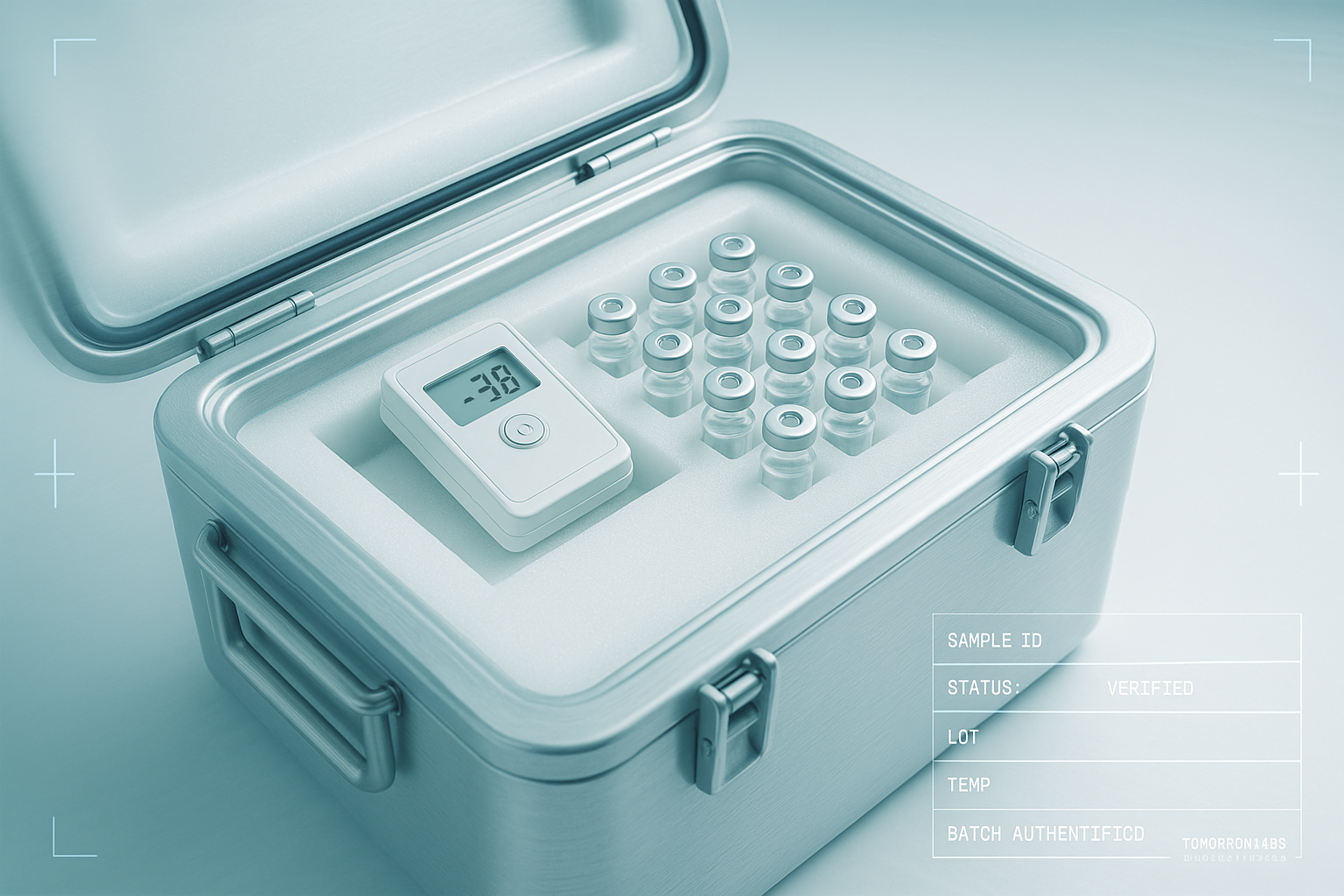
Cold-chain delivery is a logistics term, not a marketing one. It refers to an unbroken sequence of temperature-controlled conditions — from the point a preparation is made, through storage, through transit, to the point it's handed to the patient. Every link in that chain is monitored. If the temperature moves outside a defined range at any point, that's a documented event, not a guess.
This matters because temperature control isn't about freshness in the way people think about food. It's about molecular stability. Many compounded preparations contain active ingredients that are sensitive to heat, light, or temperature fluctuation. Outside the correct range, a compound can degrade — losing structural integrity, changing concentration, or breaking down into different substances entirely. None of that is necessarily visible. A vial can look completely normal and still have been compromised in transit.
Why this matters specifically for compounded preparations
Compounded preparations are made to order by a licensed pharmacy, based on a physician's prescription. They are not mass-manufactured, shelf-stable consumer products sitting in a warehouse for months. That's precisely why they require tighter handling — the preparation is often more fragile, and there is no large batch buffer smoothing over inconsistency.
A licensed pharmacy partner is responsible for maintaining the correct storage conditions during compounding, and for packaging the preparation in a way that preserves those conditions through shipping — insulated containers, cooling elements, and monitored transit. This is a regulated, accountable process with a documented chain of custody: who compounded it, under what conditions, and how it moved from pharmacy to patient.
What this looks like compared to informal sources
This is the practical difference between a regulated pathway and an informal one, such as a Telegram seller or an unregistered online shop. In an unregulated channel, there is no requirement — and usually no ability — to verify how a substance was stored before it reached you, what conditions it experienced in transit, or whether it was compounded under any quality standard at all. There's no prescriber accountable for the decision to use it, and no dispenser accountable for how it was prepared or shipped.
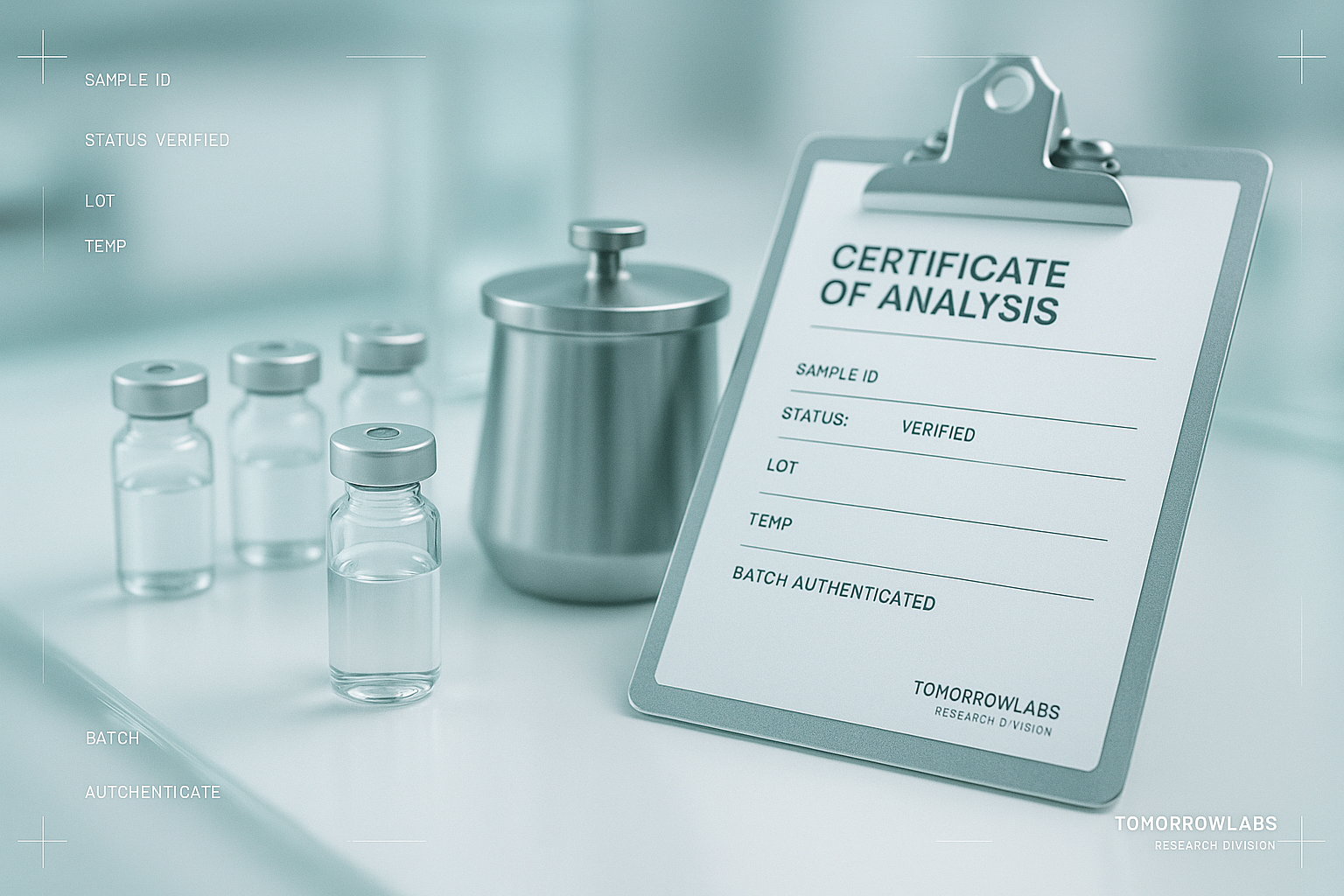
With a licensed pharmacy partner, testing can be part of that accountability. Where a Certificate of Analysis (COA) is issued for a given batch, it provides documented information about what was found in that specific sample when it was tested. A Certificate of Analysis is analytical evidence about the sample tested — not a claim of clinical safety, efficacy, or regulatory approval. It's one piece of evidence in a larger chain of accountability, not a substitute for medical oversight.
Why the full chain matters, not just one link
Cold-chain delivery only means something in context. Correct storage at the pharmacy, correct packaging for transit, correct handling by the courier, and correct conditions on arrival all have to hold together. A single weak link — a package sitting in a hot vehicle, a delayed handoff — can undo everything upstream of it. That's why this is treated as a logistics standard with monitoring built in, not an assumption.
This is also why the process starts with a physician, not a product. Whether a compounded preparation is appropriate at all is a clinical decision, made after a licensed physician reviews your intake and history. Cold-chain logistics protects the integrity of what's prescribed — it doesn't replace the judgment behind the prescription.
If you're weighing what's actually being protected in a preparation reaching you versus one arriving in unmarked packaging with no chain of custody, the difference sits in exactly these steps. Starting with a clinical intake is how that process begins.