
Legitimacy
What DHA licensing actually verifies, and how to check it yourself
A DHA license is a verifiable credential, not a design element — here's what it actually confirms and how to check it in minutes.
6 September 2026
What a badge on a website actually proves
Anyone can put a logo on a webpage. A shield icon, a phrase like "DHA-compliant," a photo of a stethoscope next to a certificate — none of it requires verification to display. In a market where compounded prescriptions are increasingly bought and sold through Telegram groups, unregistered online shops, and DMs, the presence of a regulatory-sounding badge tells you nothing on its own. What matters is whether the specific physician attached to your care is licensed, and whether that license can be checked independently of the platform showing it to you.
What DHA licensing actually verifies
The Dubai Health Authority licenses individual physicians, not companies or websites. A DHA license confirms that a named doctor has met defined requirements around medical qualification, verified credentials, and standing to practice within Dubai's regulatory framework. It does not certify a website, a supplement, or a compounding process. It certifies a person — their identity, their qualification, and their authorization to evaluate patients and make prescribing decisions.
This distinction matters because grey-market sellers often blur it deliberately. A shop might claim its products are "physician-reviewed" or "medically formulated" without naming the physician at all, let alone identifying their license number. If there's no name attached, there's nothing to verify.
How to check it yourself
Verification takes a few minutes and doesn't require trusting anyone's marketing copy.
- Ask for the treating physician's full name and DHA license number directly.
- Cross-check that name and number against the DHA's public license verification system, not a screenshot or PDF provided by the platform.
- Confirm the license status is active, not expired or suspended.
- Separately, confirm that a compounded prescription — if one is issued — is being dispensed by a licensed pharmacy partner, since prescribing and dispensing are distinct regulated functions with separate accountability.
If a platform is unwilling to provide the physician's name or license number, or discourages you from checking independently, that itself is informative.
Why this matters more than testing claims
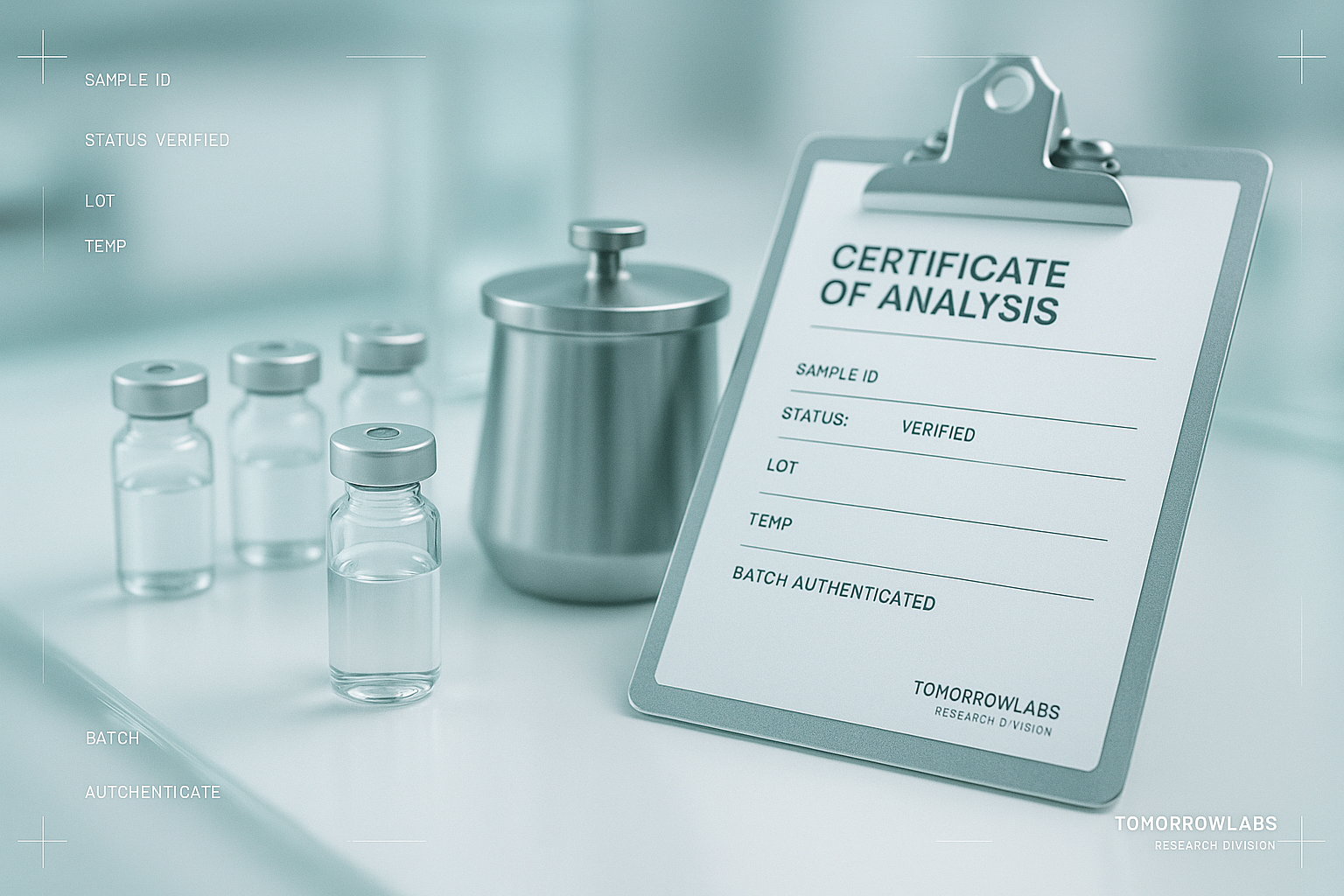
Some grey-market sellers now attach a Certificate of Analysis to a product listing, treating it as a stand-in for medical oversight. It isn't, and it was never meant to be one. A Certificate of Analysis is analytical evidence about the sample tested — not a claim of clinical safety, efficacy, or regulatory approval. It tells you something about what was measured in a specific batch. It says nothing about whether a compound is appropriate for you, at what point in your history, alongside what else you're taking, or under whose clinical judgment. That judgment is what a licensed physician provides, and it's the thing a Certificate of Analysis was never designed to replace.
The verification habit worth keeping
The broader point isn't specific to Tomorrow Labs or any single provider. It's a habit worth applying anywhere a compounded prescription is involved: don't take licensing as a claim to be believed, treat it as a fact to be checked. A real license is checkable in public records. A real prescriber will give you their name without hesitation. Anything that resists that scrutiny is telling you something, whether or not it says so directly.
If you're weighing a compounded option against something sourced informally, start by identifying the physician who'd be reviewing your case and verify their license before anything else. From there, an intake assessment will tell you whether a prescription-based approach is even appropriate for you in the first place.