Traceability
How to read a lot number, and why we ask you to check yours
A lot number ties your shipment to one specific batch and its test results — here's what that means and how to check yours.
31 August 2026
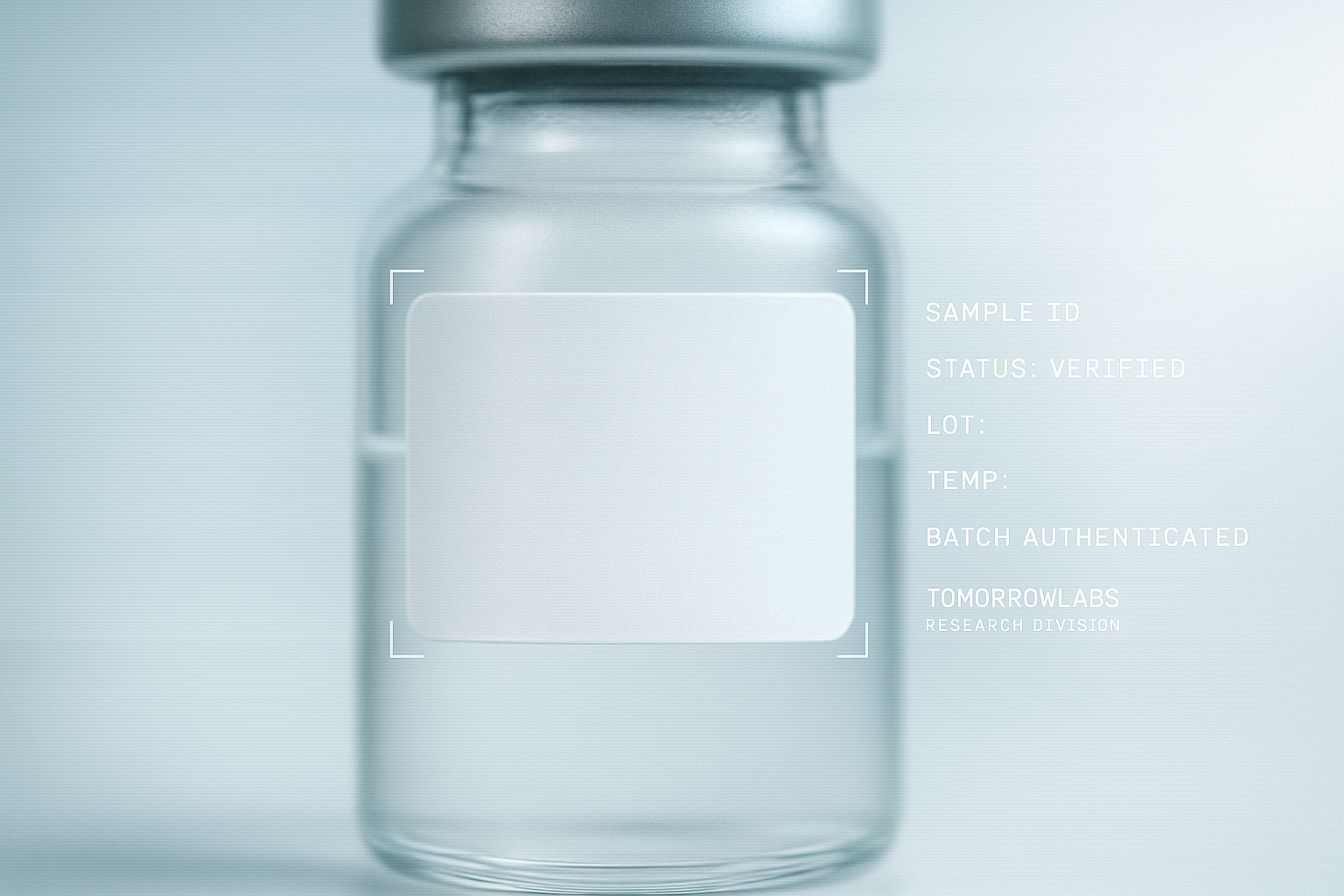
Every shipment that leaves a licensed pharmacy partner carries a lot number, printed on the label. It's easy to skip past — a short string of letters and digits next to a barcode — but it's doing more work than it looks like. It's the difference between a product name and a traceable, individually documented batch.
What a lot number actually is
A lot (or batch) number is an identifier assigned to a specific production run. When a licensed pharmacy partner compounds a preparation, that work happens in discrete batches — a defined quantity, prepared under the same conditions, from the same source materials, on the same occasion. Everything produced in that run shares the same lot number. It's how the pharmacy, and anyone checking afterward, can point to precisely which run of material a given unit came from, rather than treating a product name as one undifferentiated pool that stretches back indefinitely.
That number is recorded internally against the batch's documentation: the source materials used, the date and conditions of preparation, and the results of whatever testing was performed on a sample from that specific run.
Why traceability matters
Traceability is what makes a question answerable. If there's ever a concern about a shipment — a discrepancy, a quality question, anything that needs to be looked into — a lot number means that shipment isn't anonymous. It can be tied back to a specific batch, the materials that went into it, and the test results generated for it. Without that link, a "check" is just someone's word against a generic label. With it, there's a documented batch behind the claim.
This is also why lot numbers exist independent of any single platform. They're a pharmacy-level record, not a marketing feature — which is precisely why they're a useful thing to look for regardless of where a preparation comes from.
What happens when you check your batch through Batch Verification
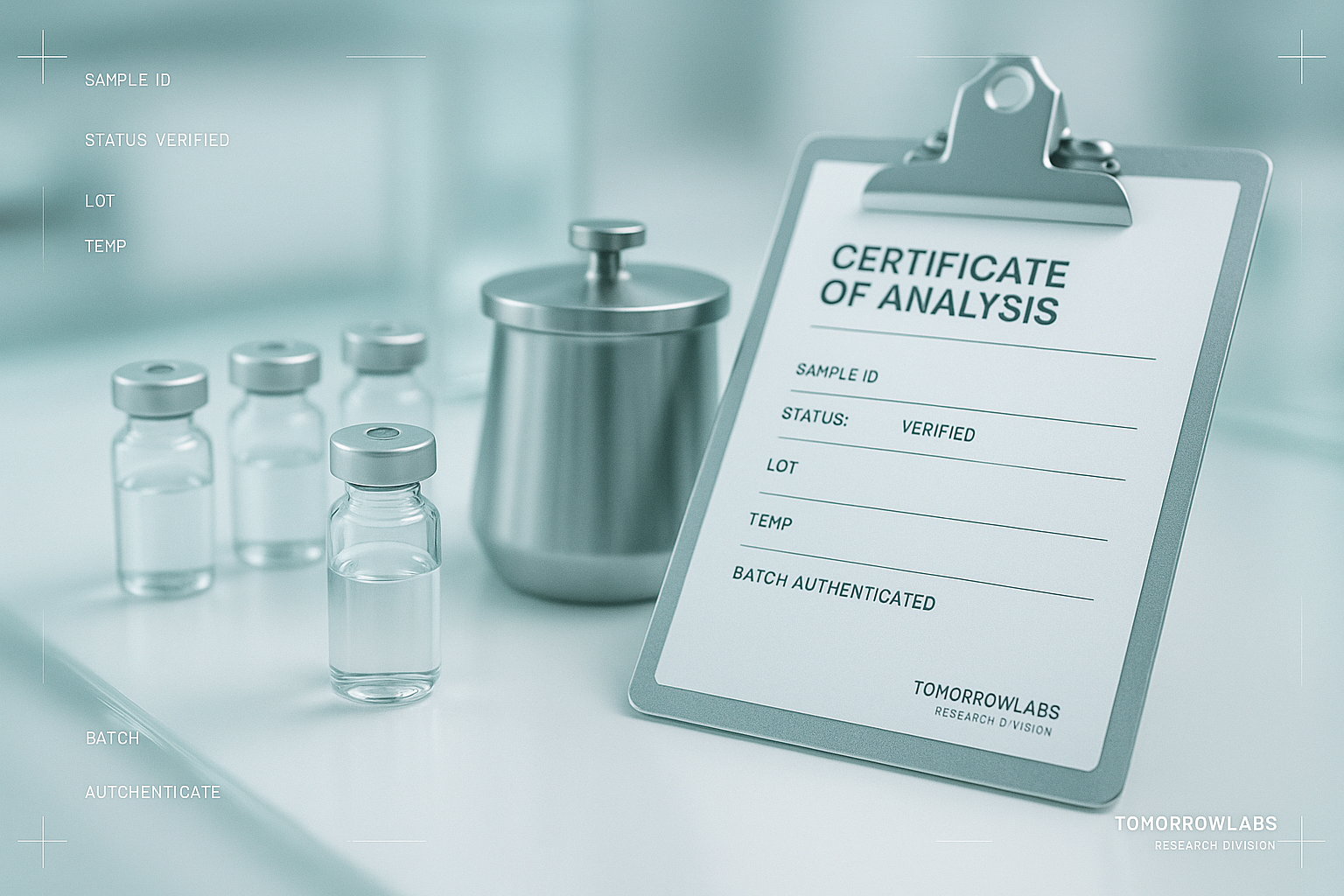
The process is straightforward. You find the lot number printed on your shipment's label and enter it into the Batch Verification tool on tomorrowlabs.ae. The tool retrieves the Certificate of Analysis that the licensed pharmacy partner generated for that specific lot — not a generic document for the product category, the one tied to the batch that was actually sent to you.
What you'll see is the identity and purity testing performed on a sample from that batch. It's worth being precise about what that confirms and what it doesn't.
A Certificate of Analysis is analytical evidence about the sample tested — not a claim of clinical safety, efficacy, or regulatory approval.
In other words, checking your lot number tells you the pharmacy tested the batch your shipment came from and can show you the result. It doesn't replace the conversation with your physician about whether a given preparation is right for you — that assessment happens separately, as part of your care. What it does is remove the guesswork around whether the material in your shipment was ever tested at all, and whether that testing is specific to your batch or borrowed from somewhere else entirely.