Traceability
Inside a compounding pharmacy: what happens to your prescription before it ships
Once a physician signs off, a licensed pharmacy partner takes over — here's what actually happens before your prescription ships.
31 August 2026
"Compounded" gets used loosely, and often vaguely, as if it describes something improvised or informal. In practice, compounding is a regulated pharmacy function performed under defined conditions, with documentation at every stage. Here's what that process actually looks like, step by step, once a physician's prescription arrives.
The prescription has to clear verification first
Nothing gets prepared until the pharmacy has confirmed the prescription itself. A licensed pharmacist reviews it against the physician's order — checking that it's complete, that it's within the scope of what the physician is authorized to prescribe, and that the details match what was clinically determined. The physician remains the prescriber of record throughout; the pharmacy's role at this stage is to verify, not to independently decide what should be prepared. If anything is unclear or inconsistent, the pharmacy follows up with the prescriber before moving forward.
Preparation happens under controlled conditions
Once verified, the preparation itself takes place in a controlled pharmacy environment, using source materials the pharmacy has sourced and documented, following procedures designed to produce a consistent result batch to batch. This isn't a kitchen-counter process — it involves equipment, environmental controls, and staff trained specifically in compounding technique. Each batch prepared this way is logged: what went into it, in what quantities, prepared by whom, on what date, under what conditions. That log becomes part of the batch's permanent record and is what a lot number later points back to.
Testing and documentation close the loop
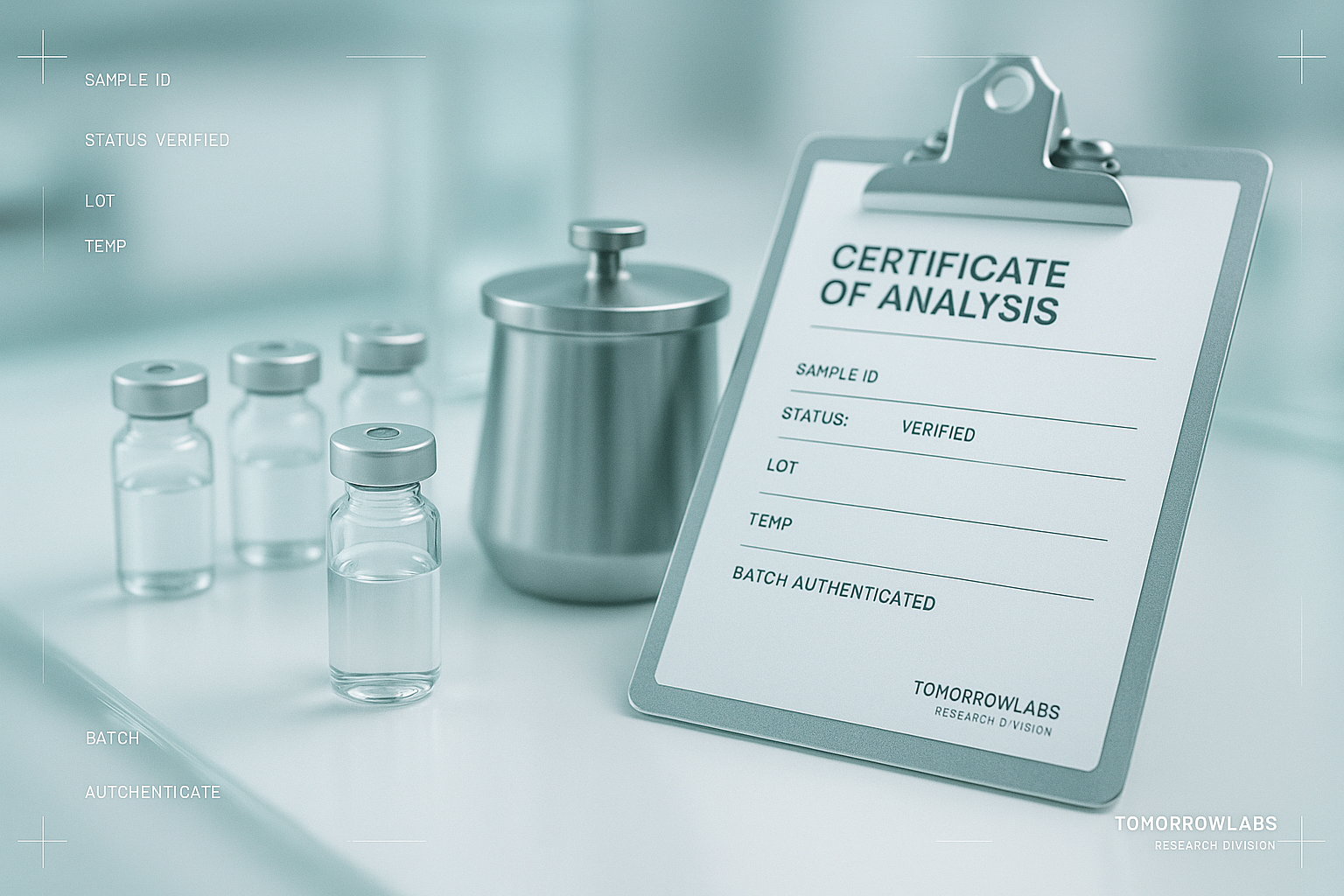
After preparation, a sample from the batch goes to testing — checking identity and purity against defined specifications, the same testing that generates the Certificate of Analysis. This is the step that turns "we followed the procedure" into a documented, testable result.
A Certificate of Analysis is analytical evidence about the sample tested — not a claim of clinical safety, efficacy, or regulatory approval.
It confirms what's in that specific batch; it doesn't replace the physician's judgment about whether that preparation is right for a given patient, which was already established earlier in the process, before compounding began.
Cold-chain shipping preserves what was verified
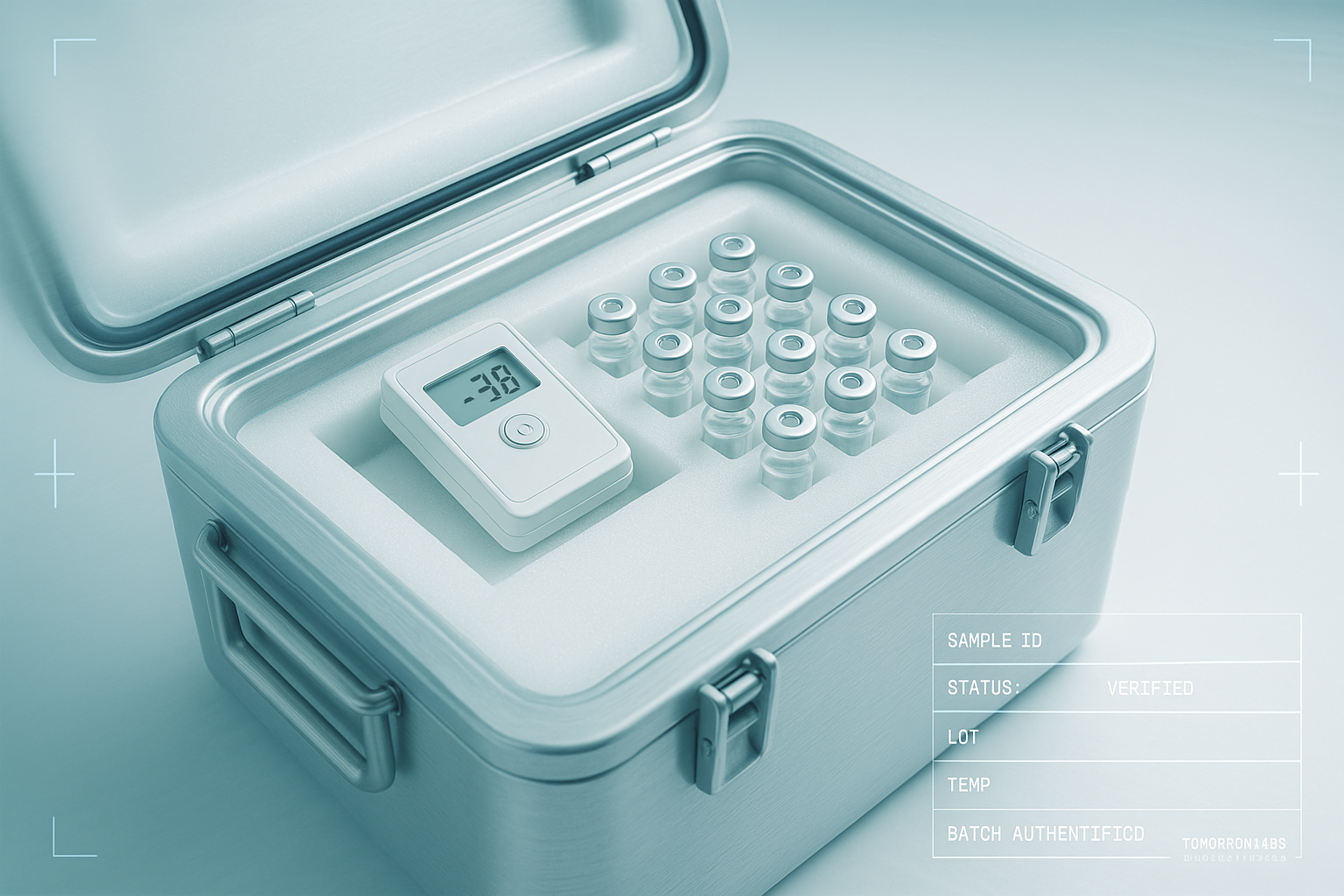
Testing a batch accurately only matters if the material reaches the patient in the same condition it was tested in. That's why temperature-sensitive preparations move through cold-chain logistics — packaging and monitoring designed to keep the shipment within a defined temperature range from the pharmacy to your door. A batch that was properly compounded and properly tested can still be compromised in transit if that chain breaks, which is part of why the shipping step is treated as seriously as the preparation itself.
None of this happens at Tomorrow Labs directly — the platform matches you with a DHA-licensed physician, who determines whether a compounded preparation is appropriate and writes the prescription; a licensed pharmacy partner compounds, tests, and ships it. What you can see of that process is the lot number on your shipment and the Certificate of Analysis behind it, available through Batch Verification — a documented record of one specific batch, rather than a claim you're asked to take on faith.