
Legitimacy
The difference between a prescriber and a dispenser, and why it protects you
Two separate licenses — one for clinical judgment, one for pharmacy preparation — exist so no single party controls both whether you receive care and what you actually receive.
31 August 2026
Ask a Telegram seller who is responsible if something goes wrong, and the question usually doesn't have a clean answer. That's not an accident — it's a structural gap. In an unregulated arrangement, the party deciding what you should receive is often the same party preparing and sending it, with no independent check in between. Licensed, physician-led care is built differently, on purpose. Two separate licenses cover two separate jobs, and understanding what each one actually does is the clearest way to see what changes when you move away from the grey market.
Two licenses, two jobs
A physician's license authorizes clinical judgment. That means reviewing a patient's history, relevant labs, and stated goals, and deciding whether a particular course of care is appropriate for that specific person — not appropriate in general, not appropriate for most people, but appropriate for them. That judgment is personal to the patient in front of the physician, and under DHA regulation, it's the physician who is accountable for it. Not a company. Not a sales team. The physician, individually.
A pharmacy's license authorizes something different: the accurate, sterile, and documented preparation of what a physician has already prescribed. That includes verifying the prescription is valid, sourcing raw materials, controlling the compounding environment, and keeping chain-of-custody records from preparation through cold-chain delivery. A pharmacy doesn't decide who should receive a prescription. It's responsible for executing one correctly once a physician has written it — and for being able to show, on request, exactly how that preparation was made.
What collapsing the two roles removes
When a single company both recommends and produces, the built-in check disappears. There's no independent clinician asking whether a course of care is right for this particular patient, because the recommendation and the production serve the same commercial interest. There's frequently no pharmacy-grade quality control either — no documented sourcing, no verified compounding standards, no traceability if a batch ever needs to be investigated. The two-license structure exists specifically to prevent one party from holding unchecked authority over both whether you receive something and what you actually receive.
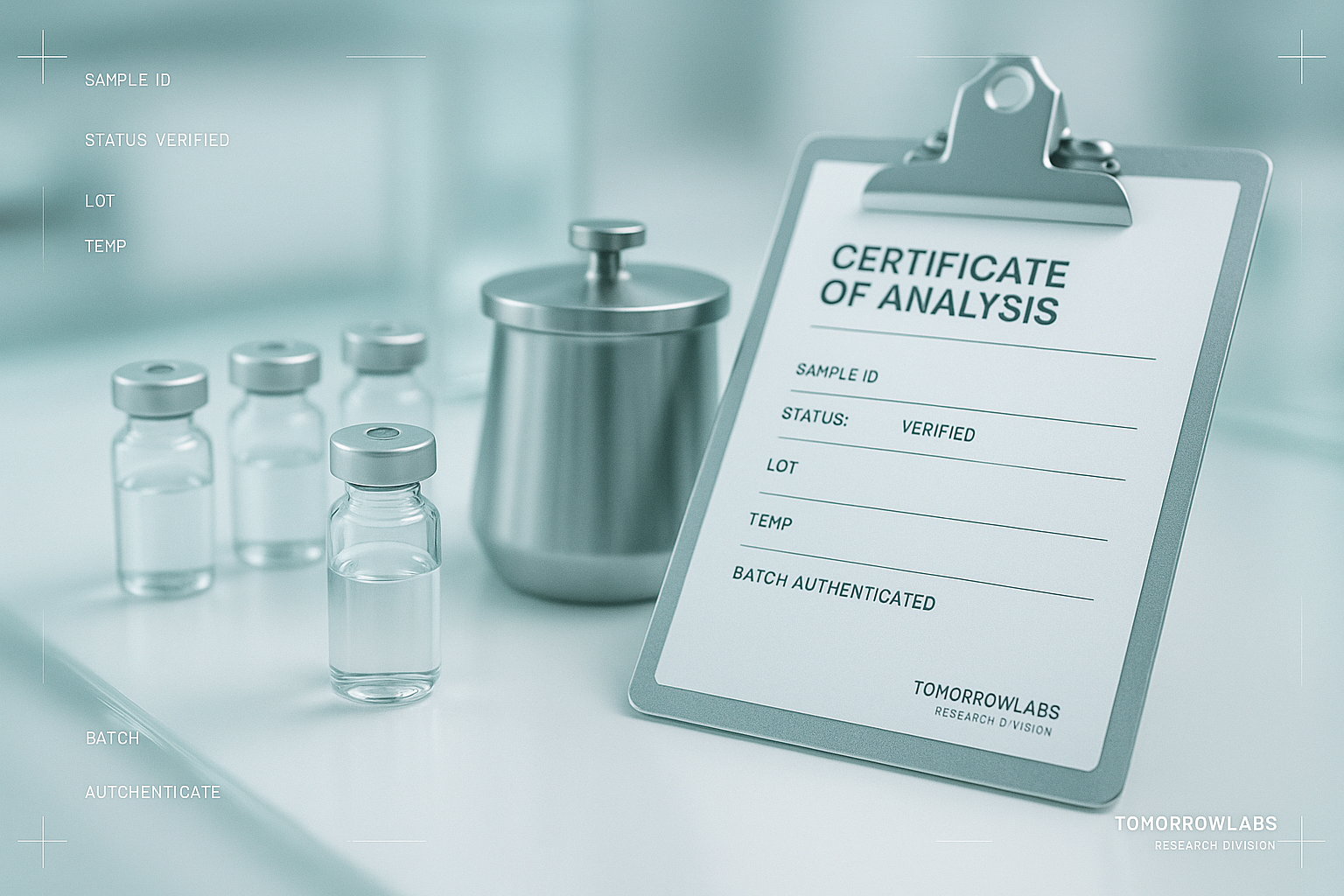
This is also why documentation matters more than it might first appear. A Certificate of Analysis, for example, is evidence that a specific tested sample matched certain specifications at a particular point in time. It's analytical data about that sample — not a guarantee of clinical safety or effectiveness, and not a substitute for a physician's individual assessment of whether something is appropriate for a given patient. A physician's judgment and a pharmacy's documentation are meant to exist together, each checking the other, rather than either one operating alone and unverified.
This is the structure Tomorrow Labs is built around. An independently licensed, DHA-regulated physician reviews your intake and history and decides whether a compounded preparation is clinically appropriate for you — and can decide that it isn't. If it is, a licensed pharmacy partner is responsible for compounding, quality documentation, and cold-chain delivery, separate from the clinical decision itself. Two roles, two licenses, two distinct points of accountability, with documentation available at each stage — not one company quietly deciding everything about your care on its own.