Traceability
What a Certificate of Analysis tells you — and what it doesn't
A COA confirms what's in a specific batch. It doesn't confirm what that batch will do for you — here's the difference.
31 August 2026
If you've spent any time comparing options — a Telegram seller, an unregistered online shop, a compounding pharmacy working through a licensed physician — you've probably seen the term "Certificate of Analysis" thrown around like a stamp of approval. It gets attached to screenshots, product listings, group chats. Understanding what a COA actually is, and isn't, is more useful than trusting the label alone.
What a Certificate of Analysis actually documents
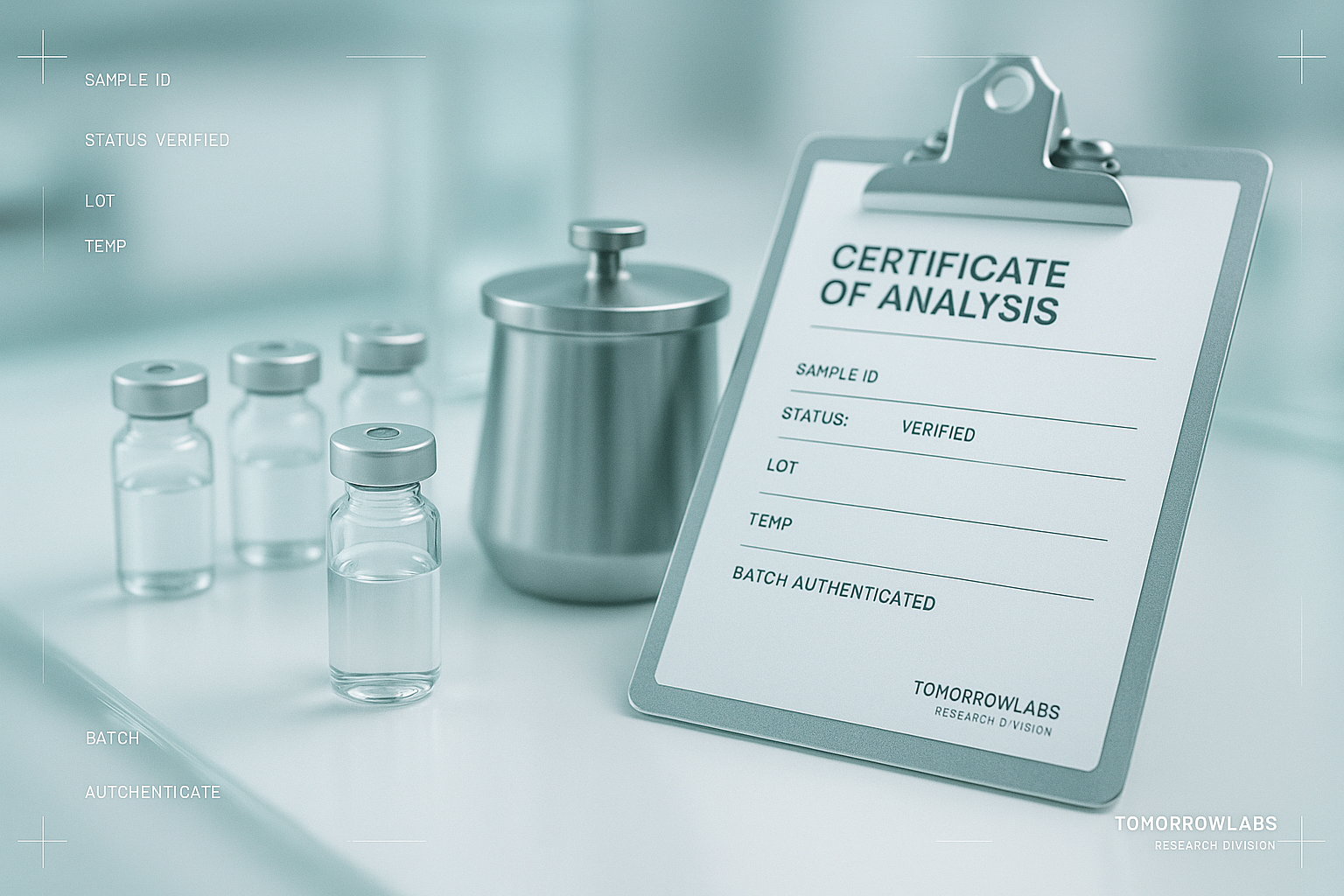
A Certificate of Analysis, or COA, is a lab report. It's produced when a sample from a specific batch is sent to a lab — typically independent of the party that prepared the material — for testing against a defined set of specifications. Two things get checked most often: identity (does the sample contain what it's supposed to contain, and not something else) and purity (how much of that substance is present, and what else, if anything, shows up alongside it). The results are compiled into a document tied to a specific lot number, not to a product name in general.
That specificity matters. A COA describes one tested sample from one batch. It is not a blanket statement covering every unit that will ever carry a given name.
What a Certificate of Analysis does not tell you
This is where a lot of grey-market marketing quietly overstates things. A COA does not tell you whether a preparation is appropriate for you specifically, whether it will produce any particular effect, or whether any regulatory authority has evaluated or approved it for a given use. It's a snapshot of one sample's composition, generated under one lab's methods, at one point in time.
A Certificate of Analysis is analytical evidence about the sample tested — not a claim of clinical safety, efficacy, or regulatory approval.
That's a meaningful distinction to sit with. Identity and purity testing tells you a pharmacy can prove what's in a batch. It doesn't substitute for clinical judgment — the assessment of whether a given preparation makes sense for a particular patient, given their history and circumstances. That judgment sits with a licensed physician, not with a lab report, no matter how clean the report looks.
Why this distinction matters more with compounded preparations
Compounded preparations aren't mass-manufactured, shelf-stable consumer goods. Each batch is prepared to specification by a licensed pharmacy partner, and testing is what confirms the pharmacy did what it says it did — batch by batch, not once at some earlier point in time and never again. That's a materially different standard than a seller who shows you a single lab report once and reuses the same image across shipments that were never individually tested at all.
At Tomorrow Labs, every shipment is tied to a specific lot number, and the COA for that lot is available to you directly through Batch Verification. You're not being asked to trust a static image circulating somewhere online. You're looking up the test result for the exact batch that shipped to you, generated by the licensed pharmacy partner that prepared it. It's one input into an informed decision — read alongside your physician's guidance, not in place of it.